Most women spend years trying not to get pregnant, and then when they actually want to, they realize they have no idea how their cycle really works. That is more common than people think. The truth is, your body gives you signals every single month. You just need to know what to look for.
Tracking your fertility cycle is not complicated. It takes consistency, not expertise. And once you understand the basics, a lot of things start to click. A good place to start is the Free Fertility Health Assessment from Conceive Life. It takes about 10 to 15 minutes and gives you a personalized picture of where you stand right now.
First, Let's Talk About Your Cycle
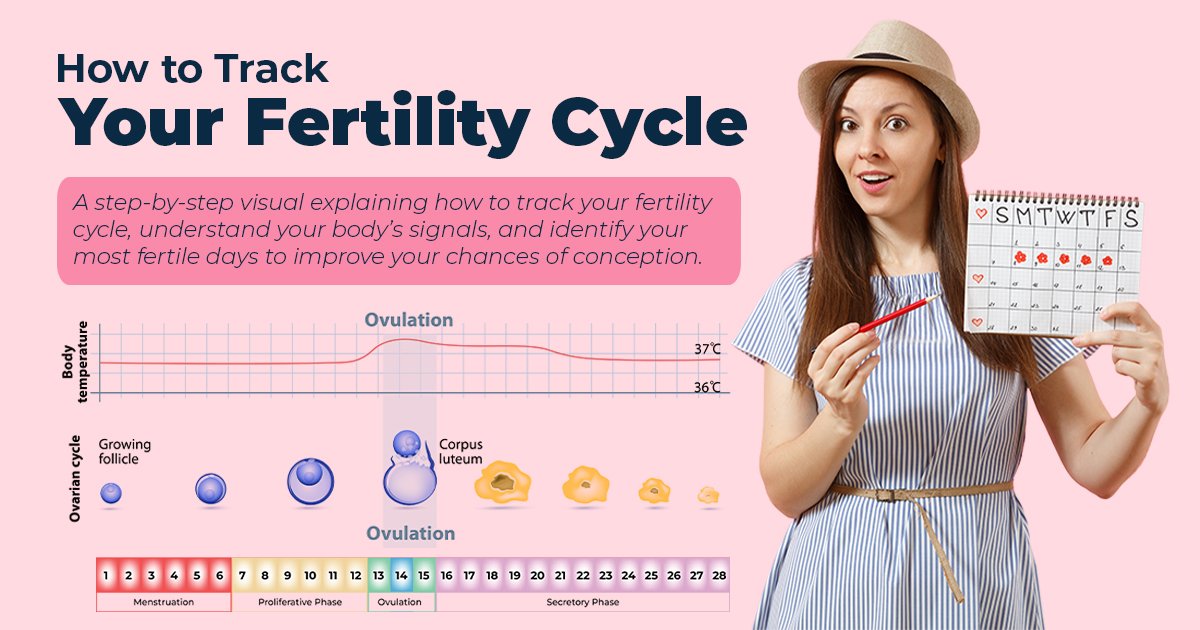
Your menstrual cycle is not just your period. That is only one part of a four-phase process your body goes through every month.
-
The menstrual phase is when your period happens. It marks the start of a new cycle.
-
The follicular phase follows right after, when your body starts preparing to release an egg. Then comes ovulation, the moment an egg is actually released.
-
Finally, the luteal phase wraps things up. This is the two-week stretch after ovulation, where your body either supports a potential pregnancy or prepares to start the cycle again.
A typical cycle lasts 21 to 35 days. Yours might be 28 days, like the textbook version, or 32. Both are fine. What matters is understanding your pattern, not anyone else's.
What Is a Fertile Window?
This is the part most people get wrong. Pregnancy can only occur during a short stretch of your cycle, roughly 6 days. That includes the five days before ovulation and the day of ovulation itself.
Here is why that window matters: sperm can survive inside the body for up to five days, but once an egg is released, it is only viable for about 12 to 24 hours. So the days leading up to ovulation are actually your most important ones for timing.
Ovulation typically happens about 12 to 14 days before your next period starts. If your cycle is 28 days, that puts ovulation around day 14. If your cycle is 32 days, then day 18 is closer. This is why knowing your cycle length is so important.
Method 1: Track Your Period Dates on a Calendar
This is where everyone should begin. Mark the first day of your period each month, either in a physical calendar or a tracking app. After a few months, you will start to see how long your cycle runs.
Most experts recommend tracking for at least six cycles to get an accurate sense of your average cycle length. Once you have that number, you can estimate when ovulation is likely to happen each month.
Keep in mind that the calendar method works best for women with regular cycles. If your cycle length swings by more than seven days from one month to the next, this method alone will not give you the full picture. That is when combining it with other signals becomes especially helpful.
Method 2: Watch Your Cervical Mucus
This one might feel unfamiliar at first, but it is one of the most reliable signals your body produces.
Throughout your cycle, the consistency of your vaginal discharge changes. Right after your period, things tend to feel dry or sticky. As ovulation approaches, the discharge becomes more abundant, clearer, and stretchier. At peak fertility, it often resembles raw egg whites: stretchy, slippery, and clear.
This change happens because cervical mucus during the fertile window helps nourish and transport sperm through the cervix and into the uterus when you notice that egg-white texture, you are likely within your fertile window.
Start checking daily after your period ends. Just note the texture and appearance. Over a couple of cycles, the pattern becomes easy to recognize.
Method 3: Take Your Basal Body Temperature (BBT)
Basal body temperature is your resting temperature first thing in the morning, before you get out of bed or check your phone. It sounds simple because it is.
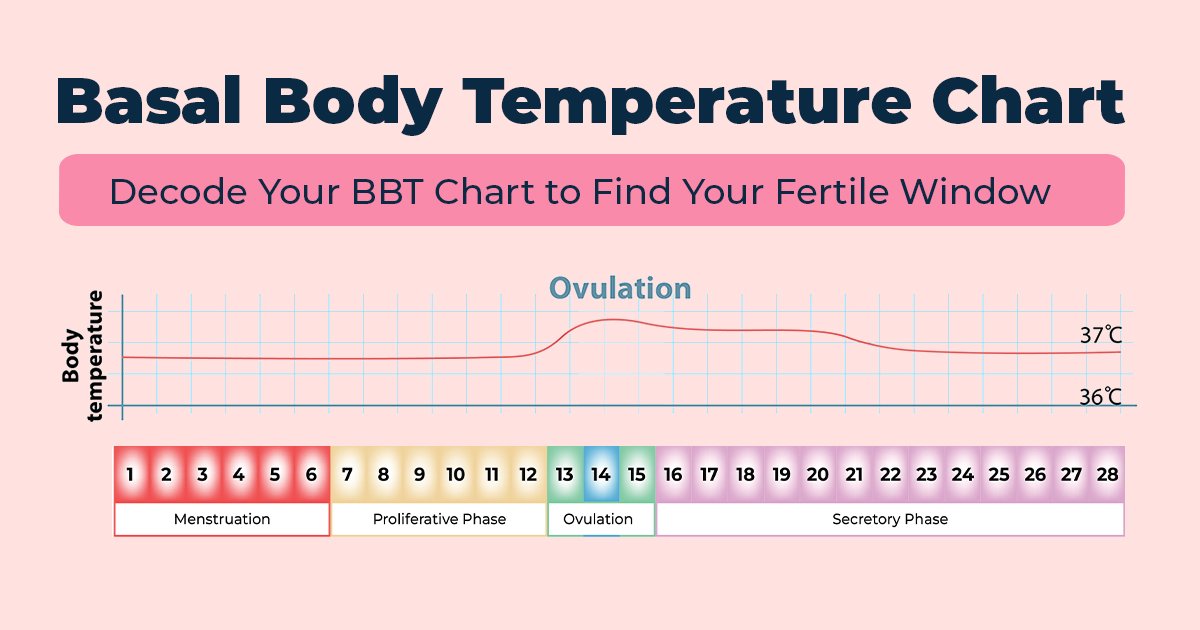
Before ovulation, BBT typically stays in the range of 97.0°F to 97.7°F. After ovulation, it rises by at least 0.5°F and stays elevated until your next period.
You will need a basal body thermometer, which measures to two decimal places and is available at most pharmacies for under $20. Take your temperature at the same time every morning before doing anything else, and log it daily. After a couple of months, you will see a clear pattern: lower temps in the first half of your cycle, a small rise after ovulation.
One important note: BBT indicates that ovulation has already occurred, not that it is about to occur. So this method works best when combined with another signal, like cervical mucus, to help you predict timing rather than just confirm it after the fact.
Method 4: Use an Ovulation Predictor Kit (OPK)
Ovulation predictor kits detect the surge of luteinizing hormone (LH) in your urine, which typically occurs 24 to 36 hours before ovulation. A positive result means ovulation is approaching, making it a useful tool for women who want a clear, concrete signal.
OPKs are widely available at drugstores and online, often sold in packs of 20 or more. They work similarly to a pregnancy test: you pee on a strip and read the result. They are straightforward, affordable, and particularly helpful if you have regular cycles but want more precision.
Combine Methods for Better Clarity
Using one method gives you a piece of the picture. Using two or three gives you the full story.
Pairing BBT with cervical mucus observation is one of the most effective combinations. Add in an OPK during the days you expect to be most fertile, and you have a layered, accurate view of your cycle. Over time, the patterns become second nature.
If you want a structured, thorough guide that walks through all of this in detail, The Conceive Life eBook covers all of these methods across 34 chapters, with over 75 visuals and diagrams that make each concept easy to follow. It is written for real people, not medical professionals.
A Few Things That Can Affect Your Cycle
Your cycle does not happen in a vacuum. Several everyday factors can shift your timing from month to month.
Research shows that stress can make it harder to get pregnant, and that being significantly underweight or overweight may disrupt ovulation and cycle length. Strenuous exercise, major illness, travel across time zones, and even poor sleep can all cause shifts in your cycle. This does not mean something is wrong. It just means your body responds to what is happening around it.
If your cycle is consistently irregular, shorter than 21 days, or longer than 35 days, that is worth mentioning to your doctor. Irregular cycles can sometimes point to a hormone imbalance that is worth addressing early.
Start Simple, Stay Consistent
You do not need to do everything at once. Pick one method, get consistent with it for a month or two, then layer in another. The goal is to build a clear picture of your personal cycle, not to follow a rigid system.
Your body has been communicating with you all along. Learning to listen to it is one of the most practical things you can do for your reproductive health.
Ready to understand where your fertility stands right now? Take the Free Fertility Health Assessment from Conceive Life. It is 100% free, takes about 10 minutes, and gives you personalized insights based on your cycle, lifestyle, and health history. No pressure, no commitment, Just clarity.