Can You Get Pregnant When You're Not Ovulating? What the Science Actually Says
Short answer: no egg, no pregnancy — but sperm surviving up to five days changes the picture more than most explanations let on.
No — you can't get pregnant on a day when no egg has been released. But sex before ovulation can still lead to pregnancy, because sperm can survive inside the body for up to five days waiting for one.
In this article
If you're searching "can you get pregnant when you're not ovulating" because the timing feels confusing, you're not alone — it's one of the most misunderstood parts of the fertility conversation. Both of these things are true at once: pregnancy always requires an egg, and a huge number of pregnancies happen from sex that occurred on a day the woman technically wasn't ovulating yet.
The short answer — can pregnancy happen without ovulation?
No. If your ovary hasn't released an egg in that cycle, there's nothing for sperm to fertilize, and pregnancy cannot happen — no matter how much sex you're having or how "fertile" the timing feels.
Here's the process in plain terms: hormones build up over roughly two weeks, then a surge of luteinizing hormone (LH) triggers your ovary to release a mature egg. That egg has a window of about 12 to 24 hours where it can actually be fertilized. After that, if it hasn't met sperm, it disintegrates and your body reabsorbs it. No egg release, no window, no pregnancy — that part of the biology is genuinely non-negotiable.
But here's where almost everyone gets tripped up: people assume "not ovulating" means "not fertile that day," and treat those as the same thing. They're not. You can have sex on a day you're not ovulating and still get pregnant a few days later, once ovulation actually happens — because sperm doesn't just disappear after intercourse. It waits.
Why sperm survival makes this confusing
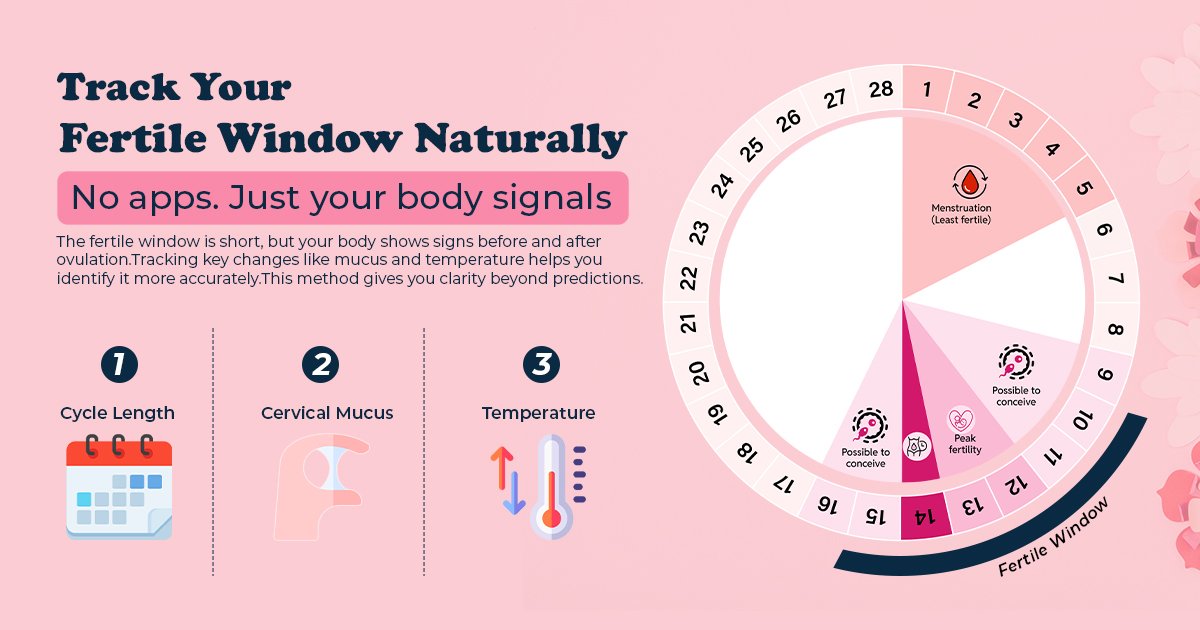
Sperm can survive inside a woman's body for up to five days, but only under the right conditions — specifically, in the stretchy, clear "egg white" cervical mucus your body produces in the days leading up to ovulation. Outside of that mucus, sperm typically survive a matter of hours, not days. This mucus, together with the timing of the egg, defines what's known as your fertile window — the stretch of days each cycle when pregnancy is actually possible.
Put the two windows together — up to five days of sperm survival, plus about 24 hours of egg viability — and you get a fertile window of roughly six days in every cycle: the five days before ovulation, plus ovulation day itself.
Here's what that looks like in terms of actual odds, based on data from a well-known study published in the New England Journal of Medicine that tracked daily intercourse timing against pregnancy outcomes:
| Day relative to ovulation | Approximate chance of pregnancy |
|---|---|
| 5 days before | Low, but nonzero |
| 3 days before | ~27% |
| 2 days before | ~33% |
| 1 day before | ~42% (peak) |
| Day of ovulation | ~20% |
| 1 day after | ~8% |
| 2+ days after | 0% |
Notice the peak isn't ovulation day — it's the day before. That's the sperm-waiting-for-the-egg effect in action. A woman who has sex two days before she ovulates isn't ovulating at the moment of intercourse, and yet she has a roughly one-in-three chance of conceiving that cycle. If you want to estimate your own dates rather than working from averages, an ovulation calculator based on your cycle length is a faster starting point than trying to do the math yourself.
The LH surge trap — when a positive test doesn't mean you ovulated
This next part rarely gets mentioned, and it's worth knowing if you've been tracking carefully and still not getting the results you expect.
Ovulation predictor kits (OPKs) don't detect the egg being released. They detect the LH surge — the hormone spike that normally triggers release. Most of the time, LH surge and actual ovulation happen together. But not always.
There's a condition called luteinized unruptured follicle syndrome, or LUFS, where the LH surge happens exactly as expected, your OPK turns positive right on schedule — but the follicle never actually ruptures. The egg stays trapped inside. No release, no fertilization possible, despite every outward sign pointing to a textbook ovulation.
It's not common enough to be the first thing you should worry about, and it isn't something you can diagnose from an OPK or an app — it requires an ultrasound to confirm whether the follicle actually ruptured. But if you've had several cycles where your tracking looks perfect and pregnancy still isn't happening, it's a legitimate, evidence-based reason to bring up with a doctor, rather than a sign you're doing something wrong.
Specific scenarios people search for
Can you get pregnant on your period?
Yes, though it's uncommon, and cycle length is the deciding factor. Say your period runs seven days and you have sex on day six — still bleeding, feels like the "safe" tail end of your cycle. Sperm from that encounter can survive up to five days, putting viable sperm in your body through day 11. If you have a shorter cycle and ovulate around day 10 or 11, that sperm is still there waiting. You didn't get pregnant "on your period" in any literal sense — you got pregnant because the sperm outlasted the gap between your period and ovulation.
Can you get pregnant right before your period?
This is genuinely the lowest-probability window in a typical cycle. In a standard 28-day cycle, ovulation happens around day 14, and your period arrives about 14 days later. By the time you're a day or two out from your period, you're roughly two weeks past ovulation — long after both the egg and any lingering sperm would have lost viability.
Can you get pregnant while breastfeeding?
Exclusive breastfeeding can suppress ovulation effectively — the Lactational Amenorrhea Method (LAM) is rated around 98% effective, but only under strict conditions: baby is under six months old, you're breastfeeding exclusively, and your period hasn't returned. The tricky part is that ovulation returns before your first postpartum period, not after — meaning you can ovulate, and get pregnant, without any warning sign that your fertility is back online.
Can you get pregnant on birth control if you're not ovulating?
This is where a lot of general advice gets too vague to be useful. Here's the breakdown by method — for a fuller picture:
| Method | How it works | Breakthrough ovulation risk |
|---|---|---|
| Combined pill | Suppresses ovulation via estrogen + progestin | Low if taken consistently; rises with missed pills |
| Progestin-only pill | Thickens cervical mucus; may or may not suppress ovulation | Higher than combined pill; timing matters more |
| Hormonal IUD | Thickens mucus, thins uterine lining | Varies — many users still ovulate normally |
| Copper IUD | Sperm-hostile environment, no hormones involved | Ovulation is unaffected — expected, not a failure |
| Implant | Strongly suppresses ovulation | Low, but not zero over years of use |
| Patch / Ring | Similar mechanism to combined pill | Low with correct, consistent use |
The copper IUD trips people up the most — it's genuinely normal to keep ovulating on it every single cycle, because it was never designed to stop ovulation in the first place.
"I'm not ovulating" by life stage — how long is normal?
Postpartum: If you're not breastfeeding, fertility after birth can return as early as 6–8 weeks — sometimes before your first postpartum period even shows up. If you're exclusively breastfeeding, it can be delayed for many months, and varies enormously from person to person.
Coming off hormonal birth control: For the pill, patch, or ring, ovulation often resumes within a month or two of stopping.
Perimenopause: Cycles without ovulation become more frequent as you approach menopause, often years before periods stop altogether. This is normal biology, not a malfunction — but it does mean cycle tracking gets less reliable during this stage.
As a general marker across all of these: if it's been over three months with no signs of ovulation returning and you're actively trying to conceive, it's worth a conversation with your doctor rather than more waiting.
Signs you might not be ovulating
Recognizing the signs of ovulation is the first step to knowing whether pregnancy is possible in a given cycle. Watch for the absence of these — and consider tracking your cycle symptoms for a clearer picture over time:
- Periods that are irregular, very light, very heavy, or absent altogether
- No noticeable change in cervical mucus around the middle of your cycle
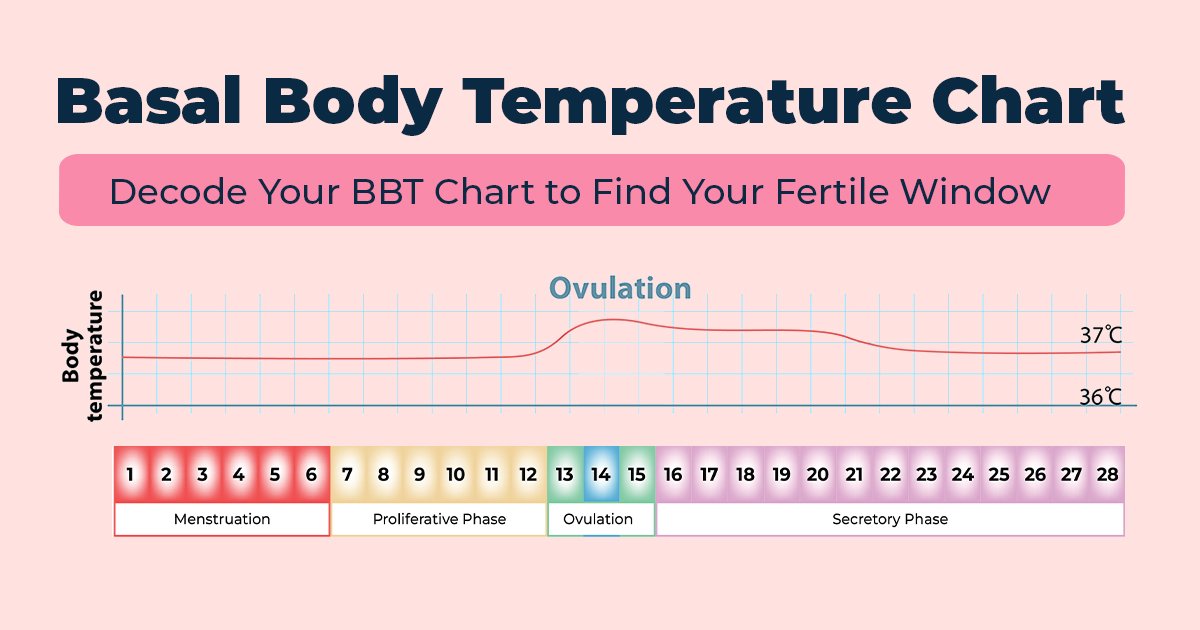
- A basal body temperature chart that stays flat all month instead of rising after ovulation
- Ovulation tests that never turn positive, even after testing across a full cycle
- No mid-cycle symptoms at all — not diagnostic alone, but worth noting alongside the rest
Quick self-check: am I likely ovulating?
If you want a fast gut-check before booking a doctor's appointment, run through this:
- Are your cycles between 21 and 35 days and reasonably consistent month to month? If yes, that's a good sign ovulation is happening regularly.
- Do you notice clear, stretchy cervical mucus at some point mid-cycle? That's your body's fertile-window signal.
- Does your basal body temperature rise and stay elevated for the second half of your cycle? A sustained rise is one of the more reliable confirmations that ovulation occurred.
- Have your ovulation tests turned positive at least once this cycle? A positive result means an LH surge happened — a reasonable indicator, though not absolute proof (see the LUFS section above).
If you're answering "no" to most of these across more than one or two cycles, that's a real signal to talk to a doctor — not a reason to panic, just a reason to get it checked rather than keep guessing.
Can ovulation tests and apps be wrong?
Yes, and it's worth being honest about this rather than assuming your tracking is flawless. OPKs measure LH, not the egg itself — a positive result is a strong clue, not proof. Cycle-tracking apps predict your fertile window using averages and your input history, but ovulation timing can shift by five or more days from cycle to cycle even in women with generally "regular" periods. Basal body temperature is the most reliable of the three for confirming ovulation happened, but it only tells you after the fact.
None of these methods are wrong to use — the honest takeaway is that no single one is precise enough to rely on alone.
What to do if you had unprotected sex and aren't sure you're ovulating
Timing matters more than panic does. A pregnancy test relies on detecting hCG, a hormone that only appears after a fertilized egg implants — typically 6 to 10 days after ovulation, not after sex itself. Testing the next day will almost always come back negative regardless of what actually happened, simply because there's nothing to detect yet.
A realistic testing window: for most cycles, waiting until the day your period is expected — or about two weeks after the unprotected sex — gives a home test a fair chance to be accurate.
Emergency contraception is most effective the sooner it's taken, and effectiveness drops the longer you wait, if you're considering it — this is a same-day decision, not a wait-and-see one.
When to just wait it out versus call a doctor: if you're simply anxious about the outcome, waiting for your expected period and testing then is reasonable. If you have any reason to suspect complications, or you're more comfortable talking it through, there's no downside to calling your doctor.
When to see a doctor about ovulation issues
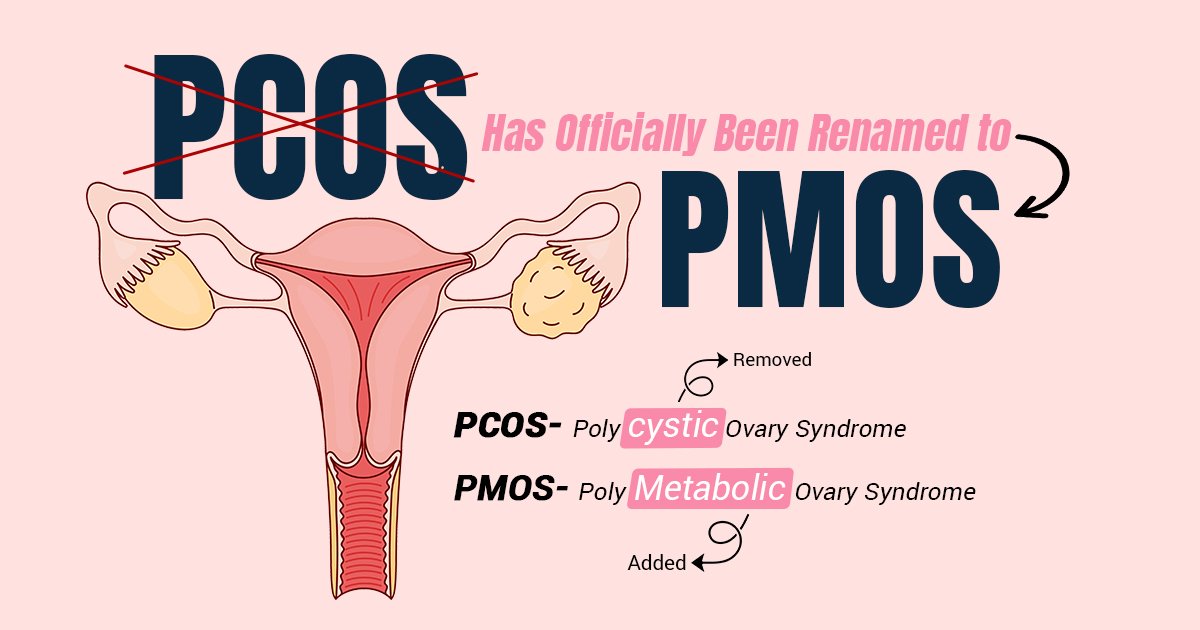
The general guidance from fertility specialists: if you're under 35 and have been trying to conceive for 12 months without success, it's time for an evaluation. If you're 35 or older, that window shortens to six months. If your cycles are highly irregular, absent, or you already suspect something like PCOS or other anovulation causes, there's no reason to wait out the full 6–12 months — bring it up sooner.
None of this means something is permanently wrong. Ovulation issues are one of the most common and most treatable causes of fertility struggles, and getting it checked earlier just means more options, not worse news.
Frequently asked questions
Can you get pregnant when you're not ovulating at all?
No — pregnancy is only possible in the roughly six-day fertile window around ovulation. What makes it feel like "any time" is that ovulation timing itself isn't perfectly predictable, so the window can land somewhere unexpected.
What's the least likely time to get pregnant?
The days right before your period, when you're furthest from ovulation and both the previous egg and any lingering sperm have long since lost viability.
Can you have a positive ovulation test and not actually ovulate?
Yes — this is luteinized unruptured follicle syndrome (LUFS), covered above. It's uncommon but real, and only confirmable by ultrasound.
How soon after ovulation can you take a pregnancy test?
Most home tests are reliable starting about two weeks after ovulation, since that's roughly how long it takes for hCG to build up after implantation.
Does an irregular period always mean I'm not ovulating?
Not always, but it's one of the more reliable outward signs worth investigating. Irregular cycles can still involve ovulation — just at inconsistent timing.
Next step
Not sure exactly where you are in your cycle?
Use our Fertility Health Tracker to estimate your fertile window based on your own cycle length — no guesswork, no averages that don't apply to you.
Calculate my fertile windowThis article is for general educational purposes and isn't a substitute for personalized medical advice. If you have concerns about your cycle, ovulation, or fertility, talk to your doctor or an OB-GYN.